![[DOOR FLIES OPEN]](https://doorfliesopen.com/wp-content/uploads/2015/08/DFO-MC-Patch.png)

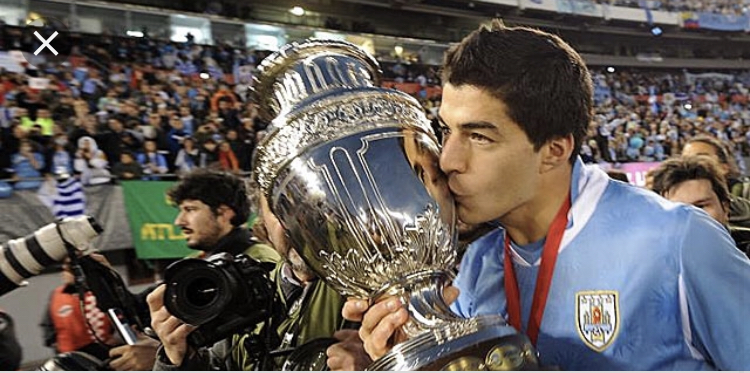
Lips near each other, no teeth showing: perfect form for a kiss. That was in 2011, the last time Uruguay won the Copa América. Incidentally, that was the last Copa in which Luis Suárez played. He will play in this one; chomp on that, folks.
There have been 43 Copa Américas played and Uruguay has the highest number of titles: 15. (Argentina is second with 14, with Brasil a distant third with 8.) The talking points on Uruguay have been covered before: the original international fútbol superpower in the first half of the XXth Century, despite being a tiny nation of about 3.5 million people whom non-South Americans think are surprisingly down-to-earth Argentinians.
Geography and runaway capitalism brought fútbol to Uruguay. Its coast had one of the main ports for English merchant ships in the XIXth Century, and the sight of pasty men braving the sun to kick around a ball captured the locals’ imagination. The first Campeonato Suramericano (later named the Copa América), was played in 1916 between Argentina, Brasil, Chile, and Uruguay. By then, Uruguay had earned widespread disgust for being the only national team in the world to include black players. Chile lost the first game 4-0, and protested that the other team had fielded “two professional Africans”. The Chileans later apologized, and Uruguay won that tournament.
Uruguay won their final World Cup in Brasil in 1950, against Brasil in front of the biggest crowd ever in attendance at a fútbol game. That was Uruguay’s fourth World Championship, and its biggest glory and curse ever since. Success in fútbol was seen as an Uruguayan birthright; all that was required was national pride and pluck. Spoiler Alert: Nawt really.
Lack of memorable success at World Cups ossified Uruguay’s reputation as early peakers who played a cynical brand of fútbol: hard fouls, emphasis on defense, look for opportune counterattacks. Then, Uruguayan fútbol entered the XXIst Century in 2006.
The national male teams, from U15 and above, have been overseen since 2006 by a former school teacher, Óscar Wáshington Tabárez, whom everybody calls El Maestro. (Fun Fact! “Maestro” is how Jesus’s disciples refer to [h]im in Spanish Bibles.) In brief, the Uruguayan domestic league has mostly been two Big Deal teams from the capital (Nacional and Peñarol, who provided most of the National Team players), plus a handful of lesser Montevideo teams and the odd upstart from the interior. The income for the teams, even the rich ones, was not there. So, Tabárez started what was called The Process, a discrete principle for development despite its Kafkian name: identify the best youngsters from anywhere; get them to top youth programs; complement their development at National Team headquarters; and, sell them early to teams abroad, in more competitive leagues, and import their new skills to the national teams.
The breakthrough came in 2010, with Uruguay’s 4th place finish at the South Africa World Cup, and then the 2011 Copa América win IN ARGENTINA SUCK IT. Then came a bite in the 2014 World Cup against that paragon of Fair Play who would never ever resort to shithousing: Italy. Sigh.
Look, it happened and Suárez paid a steep price. Since then, well. [Lights cigarette, crosses leg, lets handsomeness fully shine through.] In less than five full seasons, Suárez is already the FIF top scorer in the history of FC Barcelona (167 goals in 223 games), multiple La Liga Champion, a Chamions League Medal, plus the odd Copa del Rey thrown in for good measure. He is my favorite player, but yeah: I get it. Suárez’s competitiveness and genius will never get its fair shake. That’s reality—fine. But that shit will always make my list:
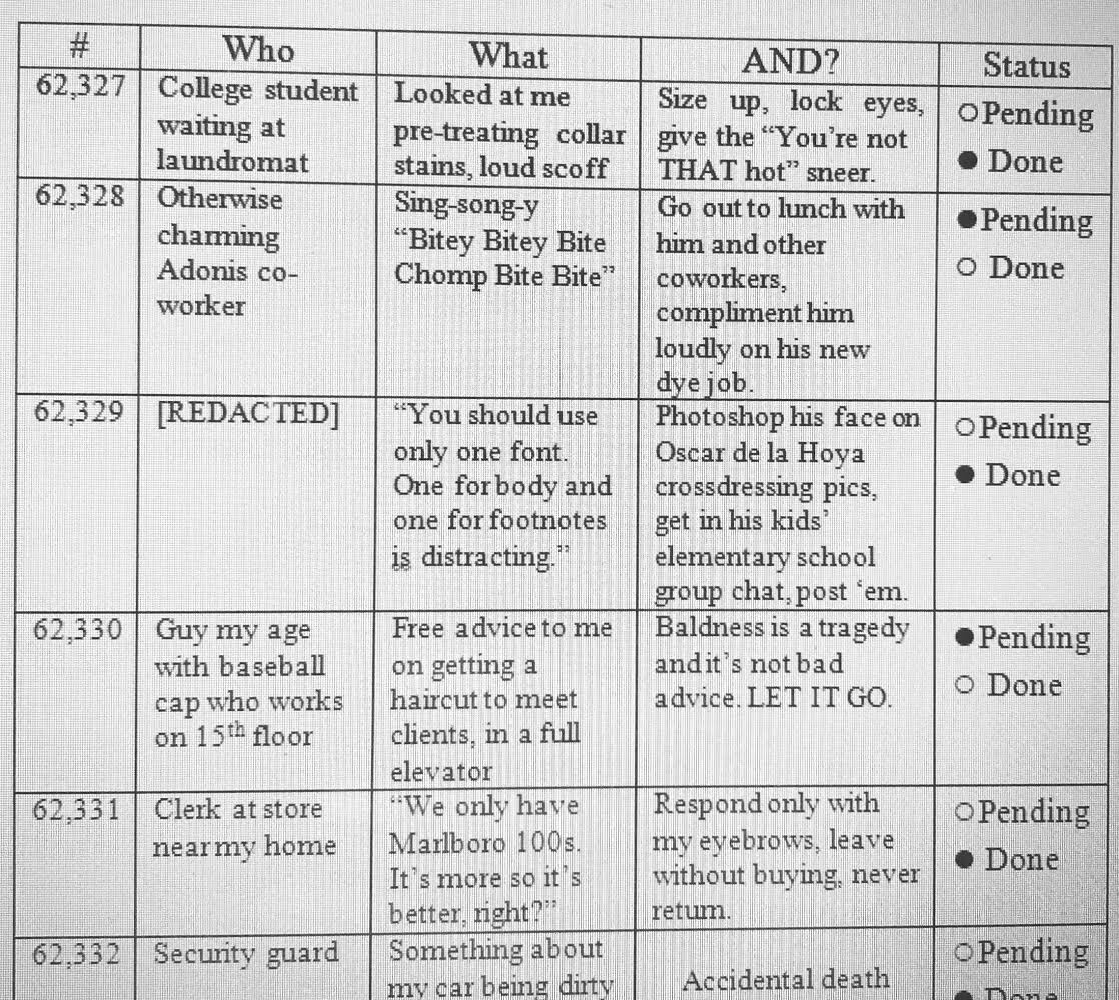
Excerpt from SLIGHTS2019.xlsx
In Russia, Uruguay had the misfortune of having forward Edinson Cavani out for the quarterfinal against World Champ Frenz, and lost 2-0. The French played keep-away masterfully, and Suárez was almost only seen in the match berating sub-turned-starter Cristhian Stuani. [shrugs.] Hothead has temper; stop the presses.
This Uruguay team should be one of the 2019 Copa favorites. The youths that got their first caps in Russia are top notch, notably midfielders Diego Laxalt (AC Milan, Energizer Bunny-type defender), Lucas Torreira (Arsenal, pint-size destroyer), Rodrigo Betancur (Juventus), Nahitán Nández (Boca Juniors hothead), and Giorgian De Arrascaeta (Flamengo, the current “WHY ISN’T HE A REGULAR STARTER” guy according to fans of the Uruguayan Nat’l Team). The goalie is still Fernando Muslera (Galatasaray), solid, SOLID guy, despite flubbing the second against France in Russia. That error caused central defender José María Giménez (Atlético Madrid) to lose his shit and spend the few minutes remaining covering his crying face with his kit. Pure lack of professionalism and poise—sure. But no one can accuse him or the rest of the charrúas for NOT going all-out for country every. Damn. Time. Full squad:
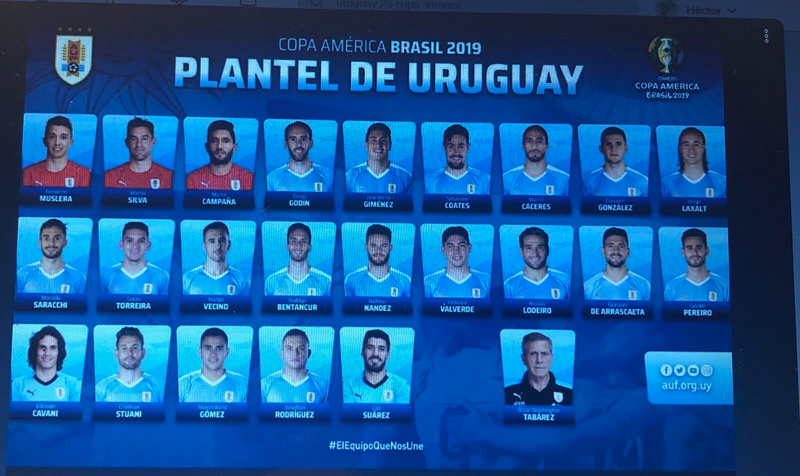
The Copa group games are not gimmes:
June 16 – vs. Ecuador
June 20 – Japan
June 24 – vs. arch-rival Chile
Japan had a very good tourney in Russia and may be tops in good manners in the fútbol world. Well, this is a Copa, where almost anything goes:
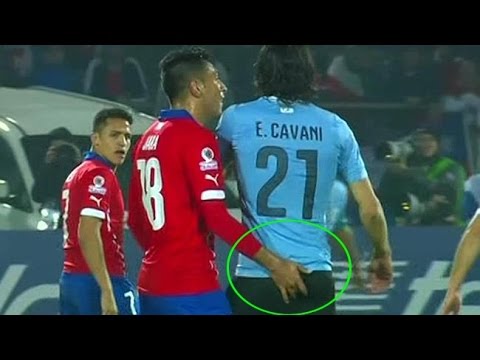
Chile, 2015: Edinson Cavani receives a red card for protesting this (via YouTube)
Alexis Sánchez in the background doing nothing. Vaya sorpresa.
Finally, this could be the last tournament in which both stars at forward, Edinson Cavani and Suárez, play for Uruguay. [UPDATE: there’s another Copa next year, so who knows.] Both are in their 30s but still atop the top scorers in Europe. I will go to the grave thinking that Uruguay would have won the 2018 World Cup if Cavani were healthy–or at the very least, in the semis, giving Belgium a chippy game that is Uruguay’s historical comfort zone. But South America is La Celeste’s stomping grounds, even in Brasil. Sweet 16 baby!
Banner via AFP / elmundo.es









Leave a Reply
You must be logged in to post a comment.